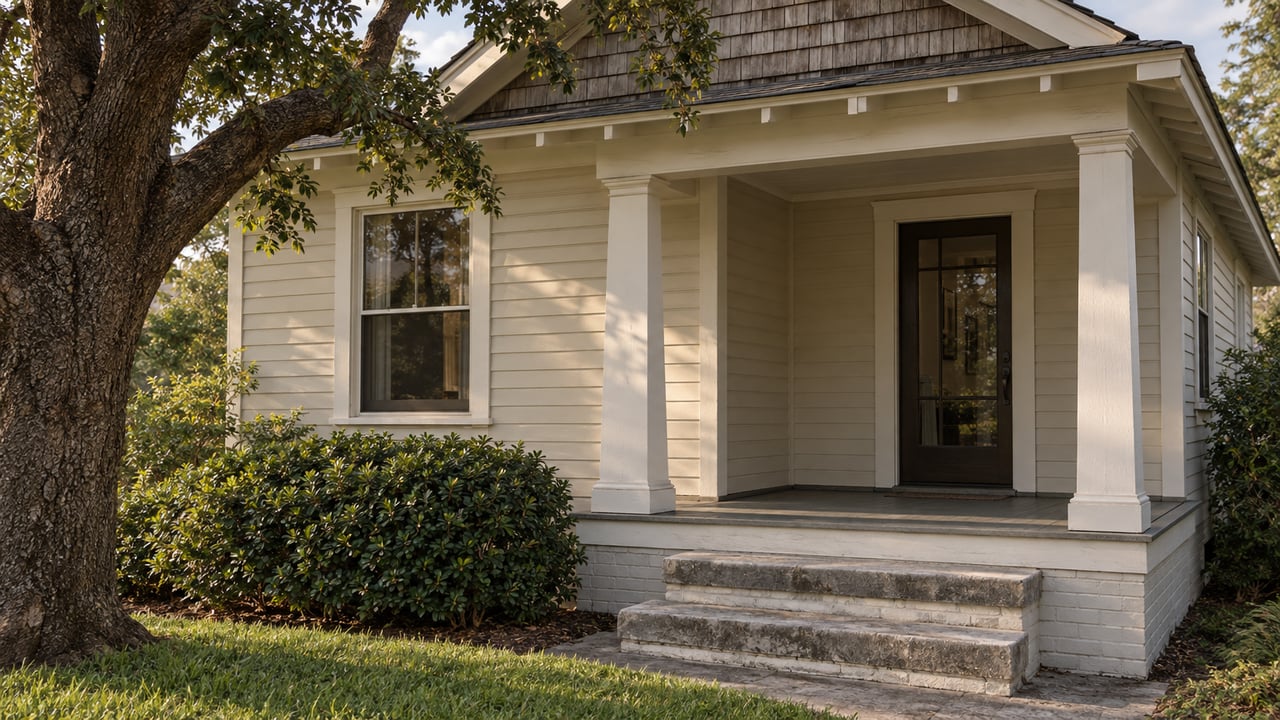
A buyer under contract on a 1920s bungalow in Montrose spends the option period the way most buyers do: staring at the foundation. The floors slope half an inch toward the back bedroom. The inspector notes a few sticking doors and a crack near the kitchen window. Negotiations open around a foundation repair estimate, and both sides treat that number as the deal's real risk.
Then, a week or two after the option period closes, the buyer's insurance broker calls back with a different list entirely. The foundation barely comes up. What does come up is the wiring in the attic, the age of the roof, and whether anyone has ever addressed moisture under the house. That call, not the inspection report, is often where a Montrose purchase actually gets decided.
This is the pattern worth understanding before you write an offer on a pier-and-beam home in this neighborhood. The item a buyer negotiates hardest over is frequently the one insurance treats as background noise. The items nobody negotiates over at all are the ones that can get a policy declined, or, as Truvo describes, canceled six months after closing.
Why the Foundation Isn't the Insurance Problem
Pier-and-beam construction is the default for homes built before the 1960s across Montrose, along with the Heights, Garden Oaks, Oak Forest, Eastwood, Woodland Heights, and Riverside Terrace. Houston sits on the Beaumont Clay formation, soil that expands when wet and contracts hard during drought, and that cycle is what produces the sloped floors, sticking doors, and trim gaps buyers learn to spot on a walkthrough. Foundation repair companies working these neighborhoods, including Bonilla Foundation Repair, which backs its work with a lifetime transferable warranty, treat this movement as routine maintenance rather than structural failure.
Here is the part that changes the negotiation. According to DuraTech Foundation Services, standard homeowners insurance in Texas does not cover foundation settlement caused by soil movement. It is classified as a maintenance issue, not a covered peril, unless the damage traces to a sudden event like a burst pipe. In other words, the foundation crack a buyer spends the most energy negotiating over during option period was never going to affect what an insurance carrier is willing to write. It is a repair-cost conversation between buyer and seller. It is not an insurability gate.
That distinction matters because it reallocates where due diligence dollars and attention should go. A transferable warranty on prior foundation work is worth confirming for resale value and peace of mind, but it will not move an insurance quote. Something else will.
The Item That Actually Ends the Deal
Knob-and-tube wiring, standard in construction before 1950, is described by underwriters as the single most common reason carriers decline or restrict coverage outright. Montrose and the Heights are both home to a meaningful share of early-1900s Craftsman bungalows still carrying original electrical systems, and unlike foundation movement, wiring type functions as a binary gate. A house either qualifies for standard coverage or it gets routed to a non-standard or surplus-lines market, often at a materially higher premium.
The riskier part is timing. This item does not always surface where a buyer expects it. A policy can get issued at closing, and then a follow-up inspection or a routine renewal review months later catches active knob-and-tube circuits that were present all along, triggering a non-renewal notice. Buyers who assume a bound policy at closing settles the wiring question can find themselves re-shopping coverage on a tighter timeline than the one they controlled during option period.
There is also a cost detail worth knowing going into 2026: according to LegalClarity, the federal tax credit that used to help offset electrical panel upgrades, under Section 25C, expired after December 31, 2025. Some state or local programs may still apply, and that is worth confirming case by case, but it should not be assumed.
Roof age carries its own version of this problem. According to Insure.com, once a roof passes twenty years, most standard policies shift it to actual-cash-value coverage only, meaning a claim pays out what the worn roof was worth, not what a replacement costs. Wood shake, slate, and tile roofs can be declined outright regardless of age. None of this shows up as a foundation line item. It shows up as a coverage limitation the buyer discovers only when shopping the policy.
What the Inspector Flags vs. What the Underwriter Actually Does With It
| Item on the inspection report | Insurance underwriting outcome |
|---|---|
| Foundation movement, sloped floors, sticking doors | Excluded from standard coverage as a maintenance issue; negotiated as a repair credit instead |
| Knob-and-tube wiring | Common outright decline or routing to non-standard/surplus-lines carrier |
| Roof over 20 years old | Shifts to actual-cash-value-only coverage; some materials declined regardless of age |
| Galvanized or polybutylene plumbing | Flags water-damage risk, often surcharged or excluded for related claims |
The Humidity Problem Montrose's Canopy Creates
Montrose's dense tree canopy and mature landscaping do more than shape the neighborhood's character. They reduce how quickly the ground under a pier-and-beam home dries out, which restoration specialists working the area point to as a driver of higher-humidity microclimates in the crawl space compared to newer, less-shaded subdivisions. Many of these bungalows have gone through multiple renovations over the decades without anyone ever addressing crawl space conditions directly, and one recurring culprit is an HVAC conversion from attic-mounted ductwork to underfloor runs, which can condense moisture and give mold a place to take hold beneath the living space.
The Cap That Matters More Than the Repair Bill
According to 247 Restoration Specialists, Texas homeowners policies cap mold coverage at $10,000 to $25,000 through an endorsement. Mold can build up gradually from the kind of chronic under-house humidity Montrose's canopy and older HVAC conversions can produce.
For a buyer, the crawl space is worth a direct question, not an assumption. A house that looks fine from the primary bedroom can carry years of undocumented moisture underneath.
The Paperwork That Converts a Decline Into a Quote
None of this argues against buying a pier-and-beam bungalow in Montrose. It argues for sequencing due diligence correctly. A few steps consistently move a property from declined or non-standard back to a standard-market quote:
- Request a licensed electrician's inspection report specifically covering wiring type, age, and whether any splicing or modifications have been made, not just the general home inspector's electrical notes.
- Pull permit records and municipal final-inspection paperwork for any prior electrical, plumbing, or roofing work. Underwriters weigh documented, permitted work far more heavily than a seller's verbal assurance that "it's been updated."
- Order a four-point inspection covering roof, electrical, plumbing, and HVAC before the option period ends, not after. This tells you what an underwriter is going to flag before they flag it, while there is still time to negotiate.
- If wiring is only partially updated, ask about interim mitigation, such as AFCI breakers on remaining knob-and-tube circuits, which some carriers accept as a bridge to standard coverage while a full rewire gets scheduled.
- Get insurance quotes shopped across multiple carriers during option period rather than the week before closing. A decline from one insurer is not the market's decline. Pricing on century-old housing stock varies significantly carrier to carrier.
The buyers who get the cleanest outcomes on Montrose bungalows are the ones who treat the insurance conversation as its own phase of due diligence, running in parallel with the inspection, not as an afterthought once repairs are already negotiated.
A Few Questions Worth Settling Upfront
Does a clean foundation inspection mean the house will insure easily? Not necessarily. Foundation movement from soil conditions is excluded from standard coverage either way, so a clean or messy foundation report has limited bearing on the insurance outcome. Wiring type, roof age, and plumbing material carry far more weight with underwriters.
Can an insurer cancel coverage after closing over something the original inspection missed? Yes. Active knob-and-tube wiring or deteriorating plumbing discovered during a later inspection or renewal review can trigger a non-renewal notice months after a policy was originally bound.
Buying or selling a pier-and-beam home in Montrose means managing two separate risk conversations at once, and the one that gets less attention is usually the one that decides the terms. If you are weighing a purchase or preparing a listing in this pocket of Houston, RE/MAX Premier Luxury Collection can walk through what a specific property's inspection and insurance picture actually means before you're locked into a contract. Schedule a confidential strategy consultation before you write the offer, not after.
This article is general information, not legal, tax or financial advice. Consult a qualified professional about your situation.