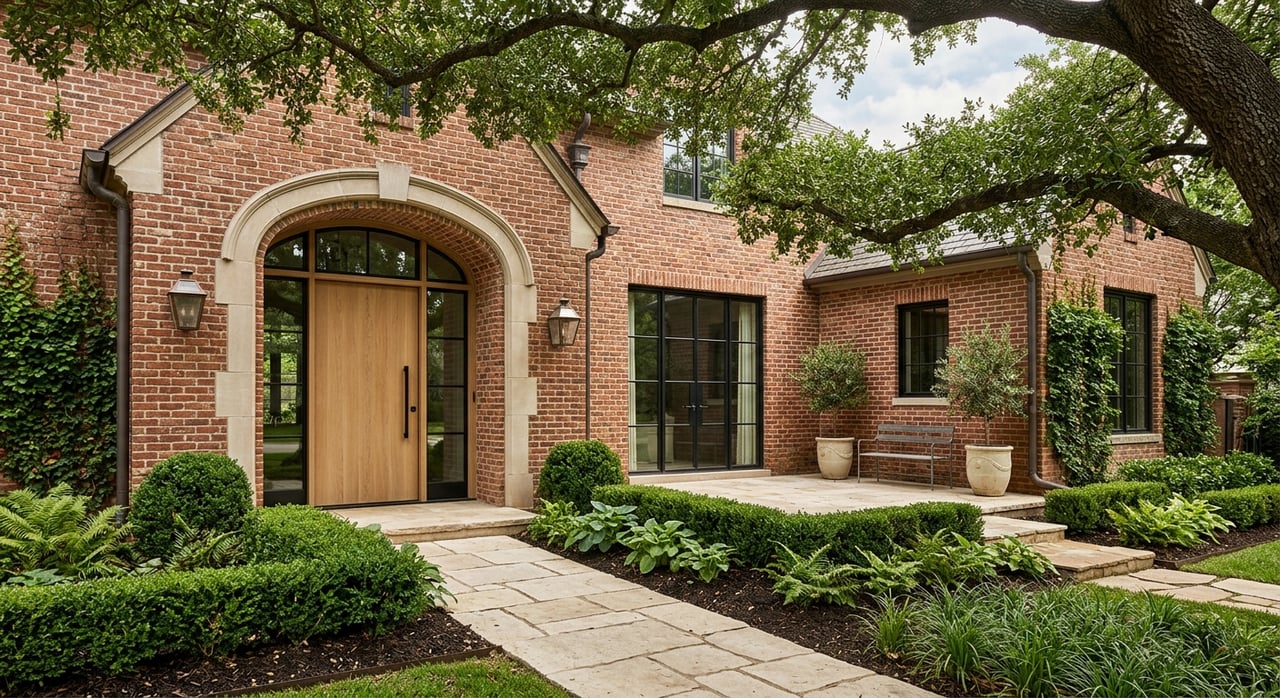
If you are drawn to Riverside Terrace, you are probably not looking for a cookie-cutter house. You are looking for a home with presence, architectural character, and a story that still feels relevant today. In this neighborhood, that story is layered across decades of design, careful updates, and changing buyer expectations. Let’s dive in.
Riverside Terrace Has Architectural Depth
Riverside Terrace stands apart because it was never built around a single style or one narrow development pattern. According to City of Houston historic district materials, the neighborhood was platted in 1924 along Brays Bayou and developed as an early automobile suburb near South Main, with parks, churches, schools, and building restrictions intended to shape the quality of surrounding homes.
That planning history matters because it helps explain why the neighborhood still feels distinctive today. Instead of repeating the same elevation from block to block, Riverside Terrace grew through waves of custom homebuilding, which left behind a richer and more varied streetscape.
A Neighborhood Shaped By Change
Riverside Terrace is not just architecturally significant. It also carries an important social history that shaped how the neighborhood evolved over time. City records note that the area first attracted wealthy Jewish families who were excluded from River Oaks, while also including Catholic and Protestant households, and by the 1950s and 1960s it was becoming racially integrated and home to many prominent Black business, civic, and professional families.
For buyers and sellers, that history adds context to the architecture. The homes here reflect more than design trends. They reflect decades of investment, adaptation, and neighborhood identity.
The Main Architectural Styles You’ll See
The architectural appeal of Riverside Terrace comes from its variety. The city describes the area as primarily Eclectic Revival, with Traditional Ranch, American Vernacular, and Mediterranean examples throughout, plus late Art Deco and mid-century modern homes in the mix.
That means you can walk the neighborhood and see homes with very different personalities, yet still feel a sense of cohesion. Many houses include brick veneer, chimneys, porches, and revival details influenced by Colonial, French, and Tudor traditions, which gives the area a layered but recognizable character.
Eclectic Revival Homes
Eclectic Revival is one of the clearest architectural threads in Riverside Terrace. These homes often blend details from historic European or early American styles instead of following one exact formula.
In practical terms, you may notice steep rooflines, decorative masonry, formal entries, quoins, and detailed trim. These homes tend to appeal to buyers who want visual presence and craftsmanship that reads as timeless rather than trendy.
Tudor And French Influences
Some of Riverside Terrace’s best-known homes show strong Tudor and French design influence. The Weingarten House from 1939 is identified as French Eclectic or French manorial, while the Otis Massey House and Frank H. Roberts House are noted as Tudor Revival examples.
These styles often emphasize strong roof forms, masonry, chimneys, and carefully composed facades. In a market setting, they tend to stand out because they offer architectural identity that is hard to replicate in newer construction.
Mediterranean And Vernacular Layers
Riverside Terrace also includes Mediterranean Revival and American Vernacular homes. The Lewis-White House, for example, is identified in city documentation as a Mediterranean Revival home dating to about 1931.
This broader mix gives buyers more than one design lane to consider. You are not limited to one historic look, which helps the neighborhood attract people who value architecture but have different preferences in layout, detailing, and exterior style.
Mid-Century And Modern Additions
One reason Riverside Terrace feels current, not frozen in time, is that its architectural story continues into the postwar era. City materials note that the neighborhood includes late Art Deco and mid-century modern homes, creating a more complete record of Houston domestic architecture from the late 1920s forward.
That matters if you prefer cleaner lines and more modern planning. Riverside Terrace is one of those neighborhoods where a design-minded buyer may find both historic revival homes and later modernist properties without leaving the same general area.
Architects Added Long-Term Value
The neighborhood’s design credibility is reinforced by the architects connected to it. City records attribute early work to John F. Staub, Birdsall P. Briscoe, William Ward Watkin, Lenard Gabert, and Joseph Finger, with later modern homes credited to Bailey A. Swenson, Bolton & Barnstone, MacKie & Kamrath, and Max Flato.
That roster tells you something important. Riverside Terrace was shaped by serious design talent, not just standard speculative construction. For buyers, that can mean more thoughtful massing, better proportions, and architectural details worth preserving. For sellers, it means provenance can be part of the marketing story when it is properly documented.
Why Restoration Quality Matters
In Riverside Terrace, condition is not a side note. It is part of the value equation. Historic records tied to individual landmark homes show how dramatically outcomes can differ depending on whether a property was preserved thoughtfully or allowed to deteriorate.
The Frank H. Roberts House landmark report notes that the home sat vacant and deteriorating for roughly ten years before rehabilitation. The same body of restoration documentation also describes the Otis Massey House as receiving major system replacements for HVAC, plumbing, electrical, and roofing while preserving original floors, trim, doors, and even its operable 1930s elevator.
That is the key lesson for today’s market. In Riverside Terrace, sympathetic restoration usually carries more weight than cosmetic renovation. Buyers tend to respond to homes that keep original massing, masonry, rooflines, windows, doors, and millwork while updating the systems that matter for daily living.
What Buyers Should Look For
If you are shopping Riverside Terrace, it helps to evaluate a home in two layers: architecture and execution. A beautiful facade means less if the systems are outdated, but a full renovation also loses impact if it strips away the details that gave the home its character in the first place.
A practical evaluation framework includes:
- Original exterior features that remain intact
- Quality of window, door, and masonry preservation
- Evidence of major system updates such as HVAC, plumbing, and electrical
- Interior millwork, flooring, and trim that still fit the home’s era
- Renovation choices that respect the home’s scale and style
For a design-minded buyer, this is where disciplined representation matters. You are not just assessing finishes. You are assessing whether the home was updated in a way that protects long-term appeal and reduces avoidable correction costs later.
What Sellers Should Emphasize
If you own a Riverside Terrace home, your best marketing angle may not be size alone. Buyers in this area often care about the quality of preservation, the thought behind any remodel, and whether the house still feels authentic to its period.
That means sellers should be ready to document improvements clearly. If original features were preserved during updates, that is worth highlighting. If major systems were replaced, that should be part of the presentation as well, because buyers often place a premium on architectural character that does not come with immediate infrastructure concerns.
New Construction Still Has A Place
Riverside Terrace is not purely a preservation story. The current market includes both updated vintage homes and newer construction. Research notes point to renovated older homes alongside newer listings, including 2024 and 2025 new-build homes marketed in contemporary and traditional styles.
This mix suggests that new construction can work in Riverside Terrace when it respects the neighborhood’s scale and street character. For buyers considering a newer home, the question is not simply whether it is new. The better question is whether it fits the visual rhythm of the block and delivers the same sense of presence that draws people to Riverside Terrace in the first place.
Location Supports Ongoing Demand
Architecture may start the conversation, but location helps sustain demand. The City of Houston super neighborhood page places Riverside Terrace east of the Texas Medical Center and near Hermann Park, and current market positioning often highlights access to downtown, the Museum District, the University of Houston, Texas Southern University, and major highways.
For buyers, that means Riverside Terrace offers more than visual character. It also provides a central Houston location that connects well to major employment, cultural, and academic destinations. For sellers, that location story can strengthen the appeal of a home that already has architectural distinction.
The Smart Way To Approach Riverside Terrace
Riverside Terrace rewards a more strategic approach than many neighborhoods. If you are buying, focus on architectural integrity, real renovation quality, and how well a home balances original character with modern livability. If you are selling, present the home through the lens of preservation, condition, and design credibility, not just standard listing metrics.
In a neighborhood this layered, the details matter. The homes that stand out are usually the ones where architecture, updates, and positioning work together. If you want guidance on buying, selling, or evaluating a distinctive Riverside Terrace property, Rhonda Hicks offers the strategic, data-driven representation today’s design-conscious clients need.
FAQs
What architectural styles define Riverside Terrace homes?
- Riverside Terrace is known for Eclectic Revival homes, along with Tudor Revival, French-influenced, Mediterranean Revival, Traditional Ranch, American Vernacular, late Art Deco, and mid-century modern designs, according to City of Houston historic materials.
Why do restored Riverside Terrace homes often stand out more than remodeled homes?
- Homes in Riverside Terrace often feel more desirable when updates preserve original massing, masonry, rooflines, windows, doors, and interior details while improving major systems like HVAC, plumbing, and electrical.
Are there newer homes in Riverside Terrace, Houston?
- Yes, current research shows a mix of renovated vintage homes and newer construction, including 2024 and 2025 builds, which suggests new homes can fit the area when they respect neighborhood scale and character.
What makes Riverside Terrace appealing beyond architecture?
- Riverside Terrace also benefits from its central Houston location near the Texas Medical Center, Hermann Park, downtown, the Museum District, the University of Houston, Texas Southern University, and major highways.
What should sellers highlight when listing a Riverside Terrace home?
- Sellers should emphasize preservation quality, documented system upgrades, original architectural details, and renovations that support the home’s historic character rather than relying only on square footage or cosmetic updates.
