Search "Memorial Park Houston homes for sale" and you will land on a median price. Search again next week, on a different portal, and the median will have moved by tens of thousands of dollars, the days-on-market figure will read almost double, and the price per square foot will look like it belongs to a different city. It does, in a sense. Two Houston areas share the word Memorial in their name and almost nothing else in their housing stock, and most of the confusion buyers feel when they start comparing numbers traces back to that shared word, not to a volatile market.
Here is the geography that explains it. The park itself, all 1,466 acres of it, sits mostly inside the West Loop, and the neighborhood that actually shares its name, Memorial, sits across from it rather than on top of it. The blocks that touch the park, that you can walk to it from, that a builder markets as "direct access to the trail system," are Camp Logan and the adjoining stretch of Rice Military. Those are two distinct HAR-recognized areas, not the same listing pool as the much larger Memorial corridor west of Loop 610, home to the separately incorporated Memorial Villages. A portal search that groups "Memorial Park" listings can quietly blend both, and a median built from that blend describes a market that does not exist on the ground.
What Each Market Actually Looks Like Right Now
The numbers only make sense once you split them apart. In the small pocket immediately bordering the park, the Camp Logan and Rice Military blocks, a March 2026 snapshot showed active listings ranging from $799,000 to $2,300,000, with a median around $859,000 and homes averaging 35 days on market. A separate pull of HAR's own subdivision data for the Memorial Park geomarket, current as of this summer, shows 21 active listings averaging $1,365,264, on homes averaging 3,579 square feet, which works out to roughly $380 per square foot.
The broader Memorial corridor tells a different story. Over the three months ending May 2026, that area's median sale price sat at $915,000, up 16.6 percent year over year, with homes selling in an average of 22 days compared to 15 days the year before. That is a deeper, faster-moving pool of inventory than the pocket touching the park, even though its median price point lands in the same rough range.
| Camp Logan / Rice Military (touches the park) | Memorial corridor (broader area) | |
|---|---|---|
| Median price (listing / sale) | ~$859K (median active listing price, Mar. 2026 snapshot) | ~$915K (median sale price, 3-month period through May 2026) |
| Average days on market | 35 (Mar. 2026) | 22, up from 15 a year earlier (through May 2026) |
| Active listing price range | $799K to $2.3M (Mar. 2026 snapshot) | Not published in the same format |
| Price per square foot (derived) | ~$380, from HAR's average listing price and square footage (current, mid-2026) | Not available from a comparable dataset |
The pocket touching the park runs a noticeably higher price per square foot than its raw median price alone would suggest, once you divide by the smaller lots and homes actually changing hands there. It also takes longer to sell than the broader corridor its name gets confused with.
The Part That Should Surprise You: Proximity Doesn't Mean Speed
The obvious assumption is that the trendiest, most walkable slice of a market should also be the fastest-moving one. Camp Logan and Rice Military are exactly that slice, close enough to the trail system and the Tom Doak-redesigned golf course to walk to both, and yet homes there sit on the market longer than homes in the larger, more anonymous Memorial corridor. The mechanism is not weak demand. It is thin inventory.
The broader Memorial corridor has a deep pool of comparable homes: similar lot sizes, similar ages, similar finish levels, which lets buyers and appraisers price a new listing quickly against a stack of recent, similar sales. Camp Logan and Rice Military do not have that luxury. Every lot is a little different. A 1980s patio home might sit two doors down from a 2026 spec build by Sade Custom Homes on a lot with direct trail access, and the appraisal comparable for one is nearly useless for the other. That heterogeneity is exactly what a data-driven buyer should expect to slow a transaction down, and exactly what a seller's pricing strategy needs to account for before a listing goes live.
Who Is Actually Building Here, And What That Tells You About the Lot Math
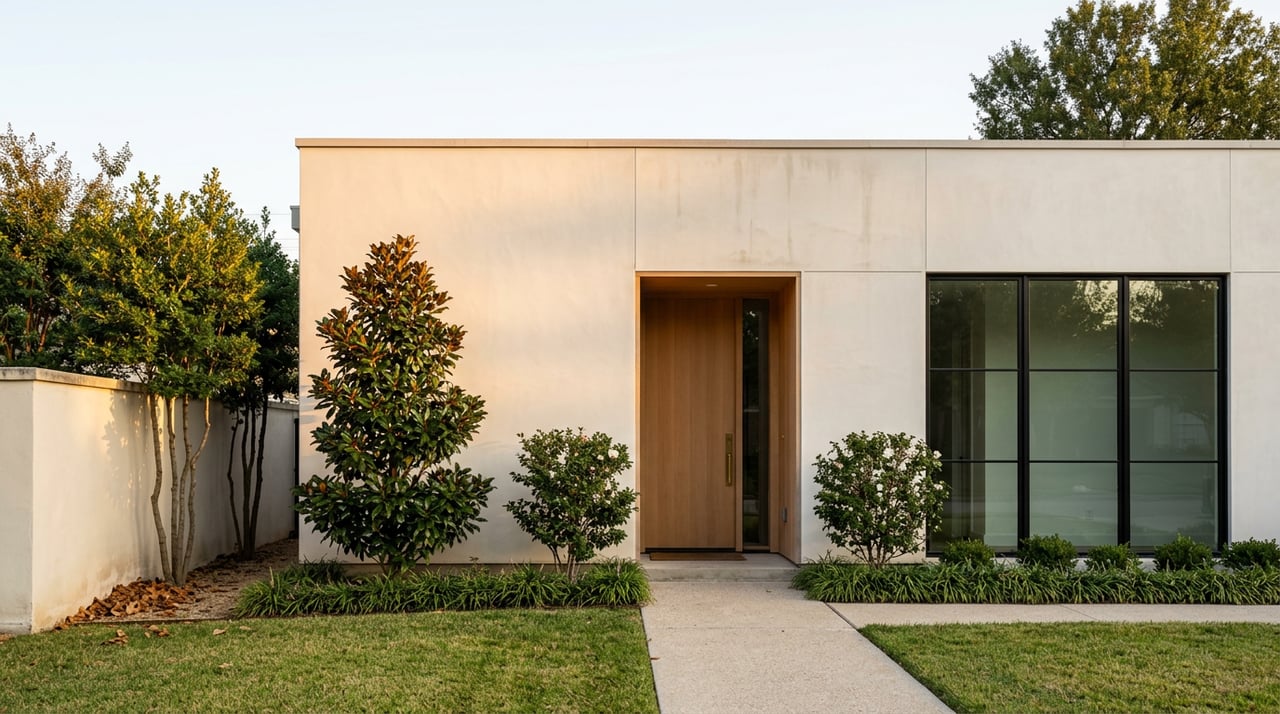
The park-adjacent pocket is in the middle of a real construction cycle, and the builders active there are traceable by name. Sade Custom Homes has delivered new construction in Camp Logan with direct access to the park's trail system. Modena Luxury Homes, describing itself as one of Houston's leading modern builders, has recent Camp Logan product with soaring ceilings and open-concept kitchens. Silvan Homes has built modern first-floor-living residences in the same footprint. A few blocks over in Rice Military, Mazzarino Construction and Development, named the Greater Houston Builders Association's 2023 Custom Builder of the Year, and Sandcastle Homes, a firm with more than three decades in the Houston market, are both delivering new luxury product marketed explicitly on its proximity to the recently renovated park.
That density of active builders is itself a signal. When five or six named firms are competing for the same small supply of teardown lots, land value becomes the dominant input in the sale price, not the condition of whatever structure currently sits on it. A buyer evaluating an older home in Camp Logan or Rice Military should ask what the lot itself is worth stripped of the house, because that is very likely the number the eventual buyer, whether that is a builder or a family planning a future rebuild, will actually be pricing against.
The Golf Course Could Make the Gap Wider
There is a specific, dated reason to expect the premium on the park-adjacent pocket to keep widening rather than close. Memorial Park Golf Course underwent a full redesign by architect Tom Doak, working with five-time major champion Brooks Koepka, that stripped the course down and rebuilt every green complex, reducing the number of bunkers from over 60 to under 24 in the process. The course hosted the Texas Children's Houston Open again this year, a PGA Tour event that only a handful of municipal courses in the country have ever carried. It draws more than 60,000 rounds of play annually even in a non-tournament year.
A tour-caliber amenity sitting inside walking distance of a few residential blocks is not a neutral fact for those blocks. It is the kind of catalyst that shows up in future appraisals as a location premium, and it applies almost exclusively to the pocket that borders the course, not to the larger Memorial corridor on the other side of the park.
What This Means When You're Actually Comparing Numbers
Before you treat any "Memorial Park" statistic as applicable to a specific address, confirm which of the two markets it describes. A few concrete steps do that reliably:
- Ask what HAR subdivision or geomarket area the listing is actually filed under. Camp Logan and Rice Military are distinct from the broader Memorial corridor, and the filing will say so even when the marketing copy does not.
- Check the lot size against the county appraisal record, not just the listed square footage of the house. In a teardown-heavy pocket, the land is frequently the larger share of the value.
- If a listing markets "walking distance to Memorial Park" or "direct trail access," confirm the actual walking distance. Some homes in the broader Memorial corridor sit on the far side of the loop and the park, close in name only.
- Treat days-on-market figures skeptically in the park-adjacent pocket. A longer marketing period there often reflects thin, heterogeneous inventory rather than softening demand, and it changes how aggressively a buyer should expect to negotiate.
A Few Questions Worth Settling Upfront
Is Memorial Park the same neighborhood as the Memorial Villages? No. The park-adjacent pocket, Camp Logan and Rice Military, sits on the inner-loop side of the park. The Memorial Villages, including areas like Piney Point and Hunters Creek, are separately incorporated municipalities further west, across the park and Loop 610, and they represent a structurally different, larger-lot housing market.
Does the golf course renovation actually affect home values nearby, or is that speculative? The renovation and tournament hosting are documented facts, not speculation. What a specific home gains from that proximity depends on the exact address, lot, and comparable sales, which is a question worth running through an actual pricing analysis rather than assuming from the neighborhood name alone.
If I want new construction near the park, should I expect a bidding process similar to the broader Memorial corridor? Not necessarily. With fewer directly comparable lots and multiple active builders competing for the same small supply, pricing and negotiation in Camp Logan and Rice Military often follow a different rhythm than the deeper, faster-moving inventory further west.
If you are weighing a purchase or a listing anywhere near Memorial Park and want the actual comparable data pulled for the specific blocks in question, not the blended portal average, RE/MAX Premier Luxury Collection can walk you through it. Schedule a Confidential Strategy Consultation and get the numbers that apply to your address, not the neighborhood's name.
