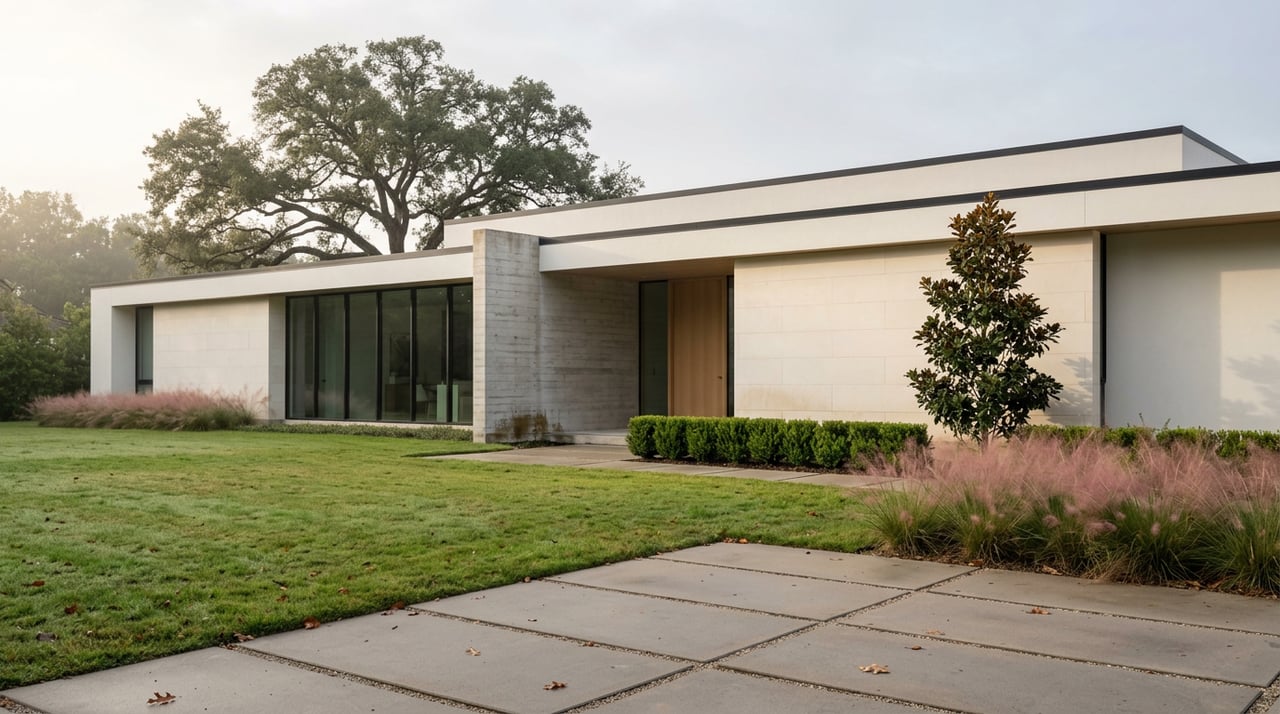
According to VCS Houston and Alair Homes, a City of Houston building permit does not clear you to touch the exterior of a River Oaks home. Before a contractor pours a foundation, widens a driveway, or removes a mature oak, the plans need a second sign-off from a private board most buyers never hear about until they are already under contract and mapping out a renovation.
That board is River Oaks Property Owners, Inc., known locally as ROPO, and it runs an architectural review process that sits alongside city permitting rather than underneath it. Buyers who assume the city's approval is the finish line often discover the actual finish line is somewhere else entirely, and that discovery tends to arrive after the closing date, when a renovation timeline has already been promised to a contractor.
One Lot, Two Reviewers
River Oaks was platted in the 1920s, and for most of its history the deed restrictions that governed it were not uniform. They were set block by block. David Heaney, who chaired ROPO's restatement committee during the neighborhood's push to consolidate those rules, was quoted by the Houston Chronicle as saying, "River Oaks had deed restrictions essentially on a block-to-block basis." Getting from that patchwork to something closer to a single rulebook took years of town halls, resident surveys, and drafts that residents pushed back on, particularly around tree removal and leaf blower rules.
What that history left behind is the structure ROPO operates today: a deed-restrictions department that reviews exterior work across the neighborhood, rather than a different standard on every street. The city of Houston still issues its own permits on top of this, because River Oaks is inside city limits and subject to the same building code as any other Houston address. The two processes do not replace each other. A homeowner needs both.
What Actually Sits on ROPO's Desk
The scope of ROPO's review is narrower than a full homeowners association, but it is not narrow. Exterior work, additions, driveways, and walkways go to the board under its architectural review process. The restrictions also govern lot coverage, capping how much of a lot can be covered by impermeable surface, which means a wider driveway or a larger patio has to fit within an allowance rather than whatever a homeowner and contractor decide looks right. Tree removal tied to new construction or renovation has to be specified on the design plan submitted for approval, and the board has the authority to require a homeowner to replace a tree that was removed but was not already dead.
Interior remodels are a different story. Because the restrictions are built around what shows from the street and what the lot physically carries, kitchen and bath work that stays inside the walls generally moves through the standard city process without a separate ROPO review. The friction shows up specifically at the property line and the roofline, not at the countertop.
Major Project, Minor Project, and Why the Label Changes Your Calendar
ROPO's own submission system splits projects into two tracks, listed on its site as Major Projects and Minor Project, alongside a separate track for Resale Certificates and Transfer Fees. Which track a project lands in affects how it moves, and contractors who work in the neighborhood regularly build their schedules around getting ROPO approval sequenced ahead of the city permit rather than in parallel with it, since a project that starts with the city before ROPO has signed off risks a stop-work conversation mid-build.
For a full custom build or a major addition, the Architectural Review Committee process asks for more than a sketch. Submissions typically include detailed architectural plans, elevations, site layouts, and landscaping for review before construction can begin. That is a heavier lift than most first-time River Oaks buyers expect, especially if their renovation budget assumed a single city permit and a contractor's start date rather than a design package built for board review.
The Ground Adds Its Own Approval Problem
Even after ROPO and the city sign off, River Oaks lots are not uniform underneath the surface, and that has design consequences. Houston's clay-rich soil expands and contracts with moisture, which is why pier-and-beam foundations are standard practice here rather than an upgrade, protecting against the settlement and cracking that a slab foundation is more exposed to over time. More specific to this neighborhood: properties within River Oaks can fall into different flood zones from one lot to the next, which can require elevated finished floor heights or additional mitigation measures depending on where a specific address sits. Two comparably priced lots a few streets apart can carry meaningfully different foundation and elevation costs before a single wall goes up, and that difference will not show up in a listing description.
The Fee at Closing Nobody Budgets For
ROPO's resale certificate and transfer fee process is a step that exists specifically because of how deed restrictions attach to a property, and it is separate from the city's own recording and title fees at closing. A resale certificate confirms the property's standing with ROPO, including whether there are any open violations tied to the deed restrictions. Buyers who skip confirming this early sometimes find out about an open landscaping or coverage violation at the worst possible point in a transaction, when there is no time left to negotiate around it.
Before You Write the Offer
A few questions are worth answering before an offer goes in on a River Oaks property, particularly if renovation is part of the plan:
- Has the seller confirmed current standing with ROPO, including whether a resale certificate has been requested and whether any violations are open on the property?
- If exterior work is planned, has anyone confirmed how much impermeable coverage the lot has left under its current use, before a driveway extension or patio gets designed?
- Does the property include mature trees near the planned work area, and has removal or replacement been discussed with ROPO's process in mind?
- Has a foundation and flood zone assessment been done for this specific lot, rather than assumed based on the general reputation of the neighborhood?
- Is the renovation timeline built around ROPO approval running before the city permit, rather than assuming both move at the same pace?
A Few Questions Worth Settling Upfront
Does ROPO review apply to a kitchen or bathroom remodel that doesn't touch the exterior? Generally no. The restrictions are built around what is visible from the street and what the lot carries, so work that stays inside the existing footprint typically moves through the standard city process without a separate board submission.
Is ROPO the same thing as a homeowners association? Not in the dues-and-amenities sense many buyers picture. ROPO's role centers on enforcing deed restrictions and reviewing exterior construction plans, alongside functions like a deed restriction patrol and resale certificate administration, rather than managing shared amenities the way a typical HOA does.
Can the city permit move faster than ROPO approval and let a project start early? It can, but starting exterior work before ROPO has signed off creates real risk, since the deed restrictions are enforceable independent of whether the city has already issued its own permit.
A River Oaks purchase is rarely just a purchase. It is a purchase plus a design conversation plus two separate approval processes that do not run on the same clock. Buyers who understand that before they write an offer protect both their timeline and their budget. Buyers who find out afterward usually pay for the lesson in delay.
If you are evaluating a River Oaks property with renovation plans attached, or preparing one for sale and want the approval questions answered before a buyer asks them, RE/MAX PREMIER can walk through the specifics with you in a confidential strategy consultation.
This article is general information, not legal, tax or financial advice. Consult a qualified professional about your situation.
